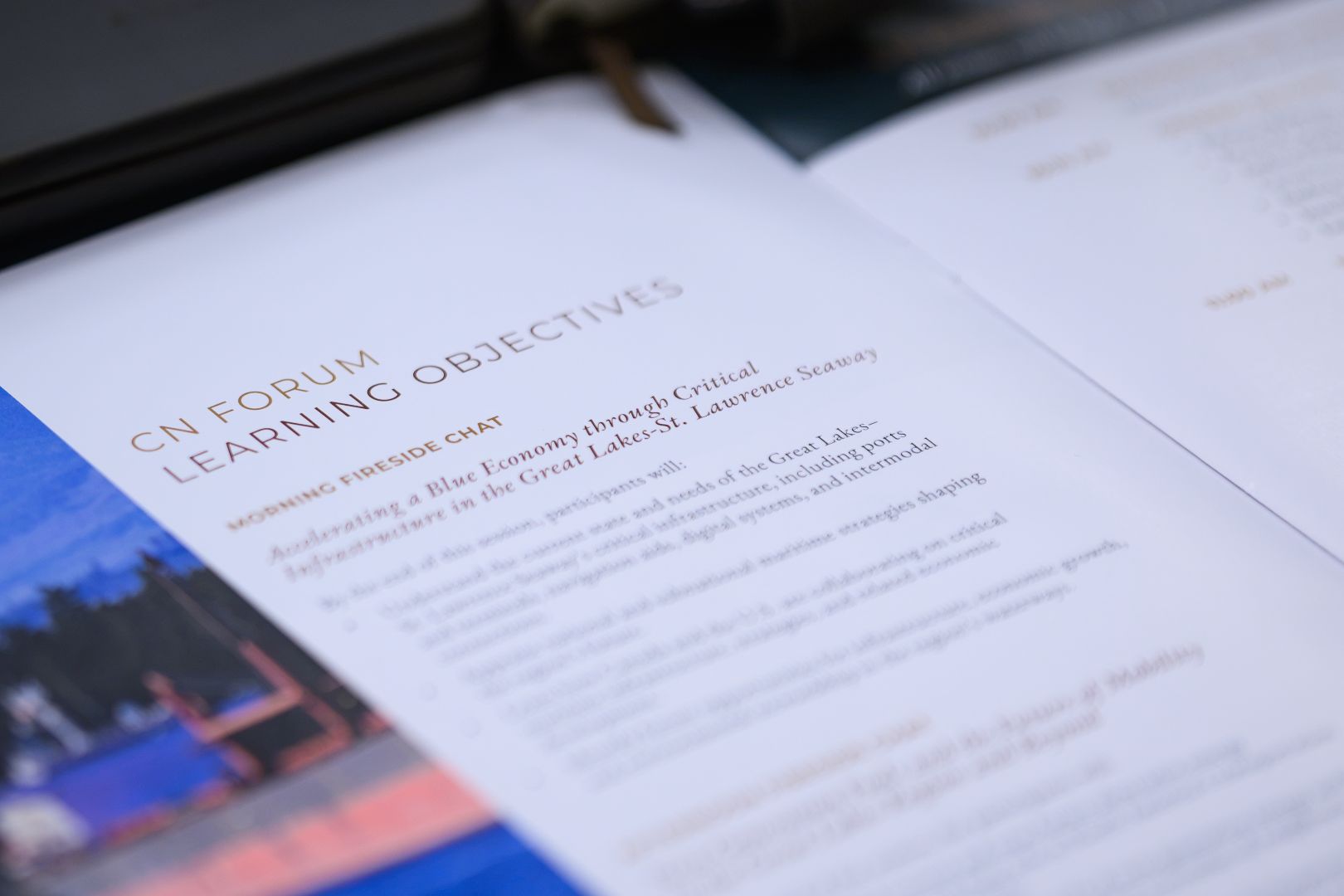
On September 16, the Canadian Studies Center held its biannual CN Forum “Accelerating Innovation through Critical Infrastructure” at the MSU Henry Center. This sold-out event drew leaders in government, policy, business, and academia and provided a venue for those interested in U.S.-Canada relations to discuss timely, forward-looking issues affecting communities on both sides of the border.
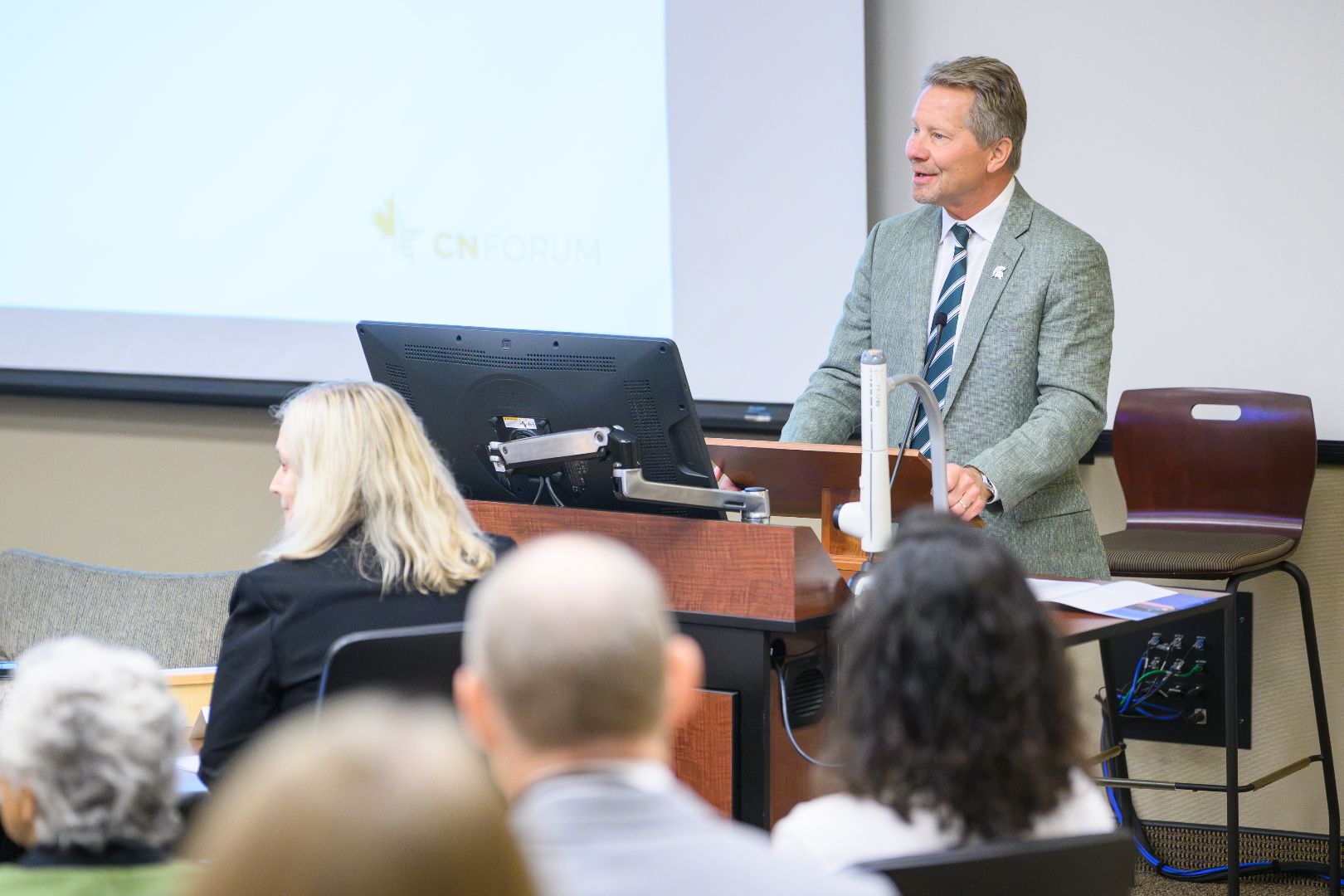
The 2026 forum focused on binational critical infrastructure, including regional maritime strategies and next-gen fuel and energy corridors in the Great Lakes region.
The day began with opening remarks and words of welcome from President Kevin M. Gusiewicz, Center Director Rebecca Malouin, Consul General of Canada in Detroit Andrea Clements, Québec Delegate in Chicago Jean-François Hould, and a representative from Canadian National Railway (CN).
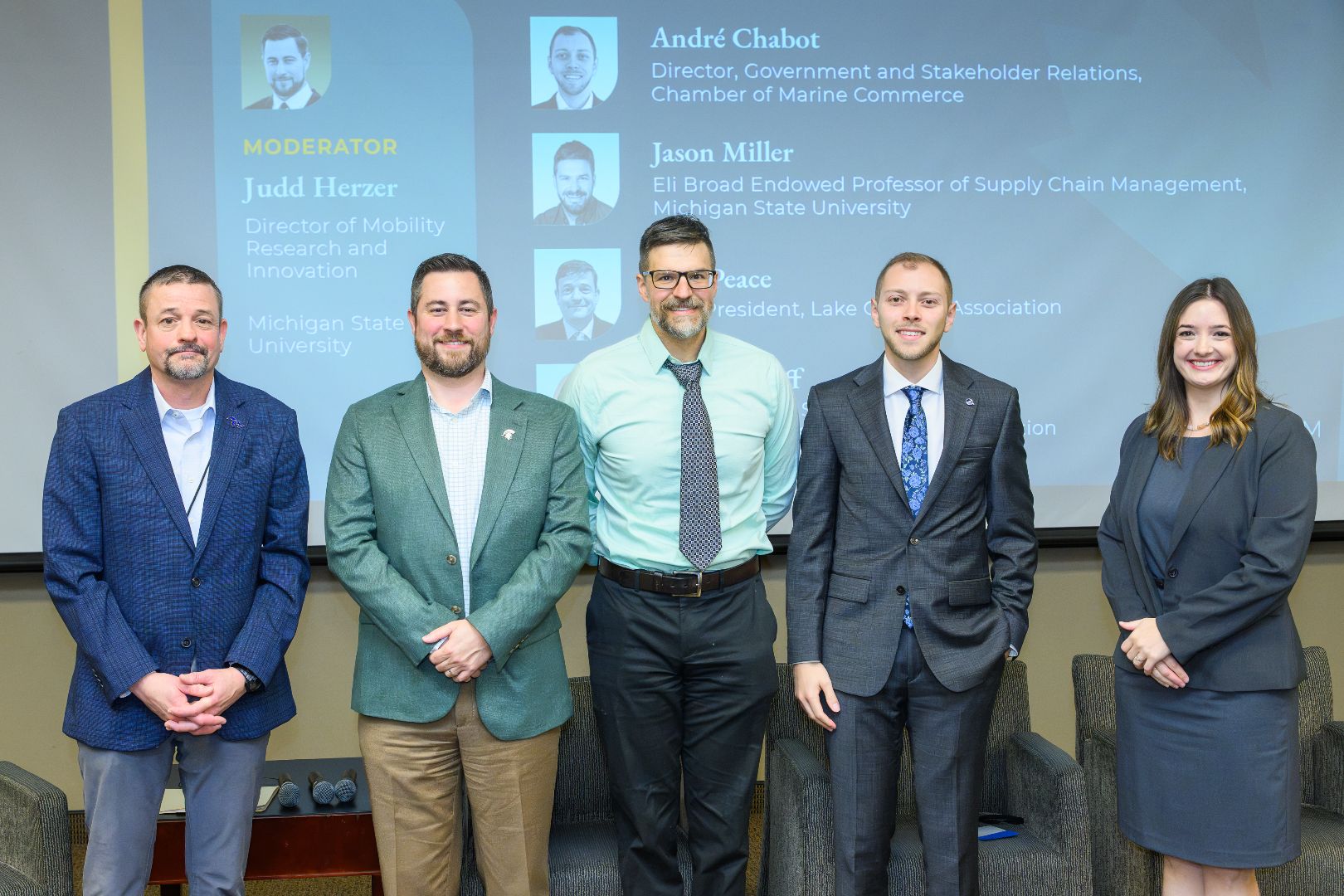
The morning panel “Accelerating a Blue Economy through Critical Infrastructure in the Great Lakes-St. Lawrence Seaway” was moderated by Judd Herzer, director of mobility research and innovation at MSU Mobility, and included André Chabot, director of government and stakeholder relations at the Ottawa-based Chamber of Marine Commerce; Jason Miller, Eli Broad Endowed Professor of Supply Chain Management; Eric Peace, vice president of the Lake Carriers' Association; and Elisha Wulff, freight policy specialist with the Michigan Department of Transportation.
Panelists discussed Michigan’s new maritime strategy and how the strategy builds on the work of state and provincial partners in the Great Lakes -St. Lawrence region. The panel also discussed maritime priorities for national and subnational governments, industry, and local communities, as well as the role of water-based shipping and transportation in regional supply chains.
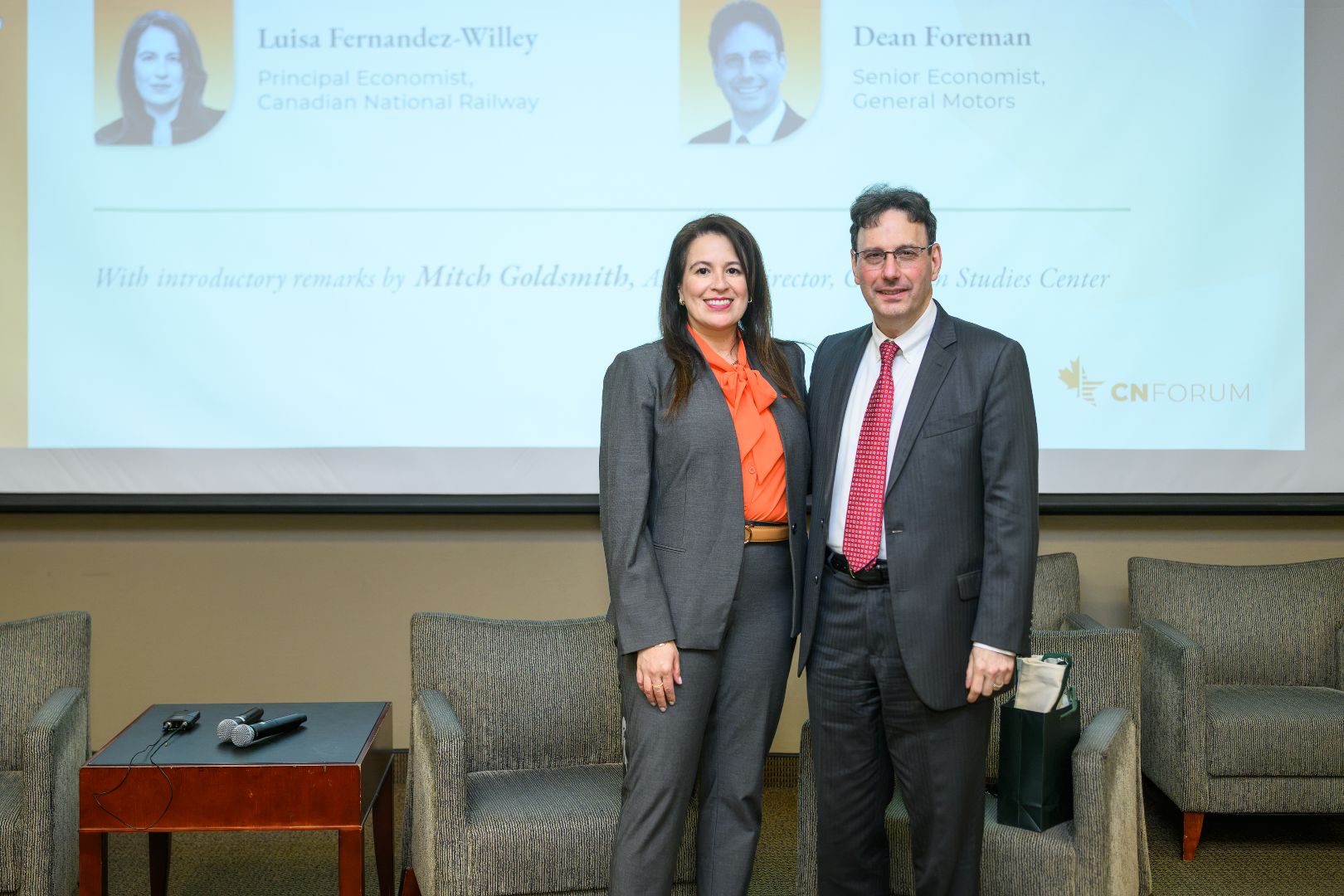
Following a networking lunch, the afternoon began with the keynote conversation “Economic Engines: Automotive Manufacturing, Trade, and Competitiveness” featuring Luisa Fernandez-Willey, principal economist for CN and Dean Foreman, senior economist for General Motors.
Fernandez-Willey and Foreman discussed the current state of the North American automotive industry, with a particular focus on the Detroit-Windsor region, and the impacts of tariffs and trade uncertainty on the industry. Finally, both shared their outlook for the industry, including how new trade relationships, AI, and increased automation may shape automotive manufacturing in the near and long term.
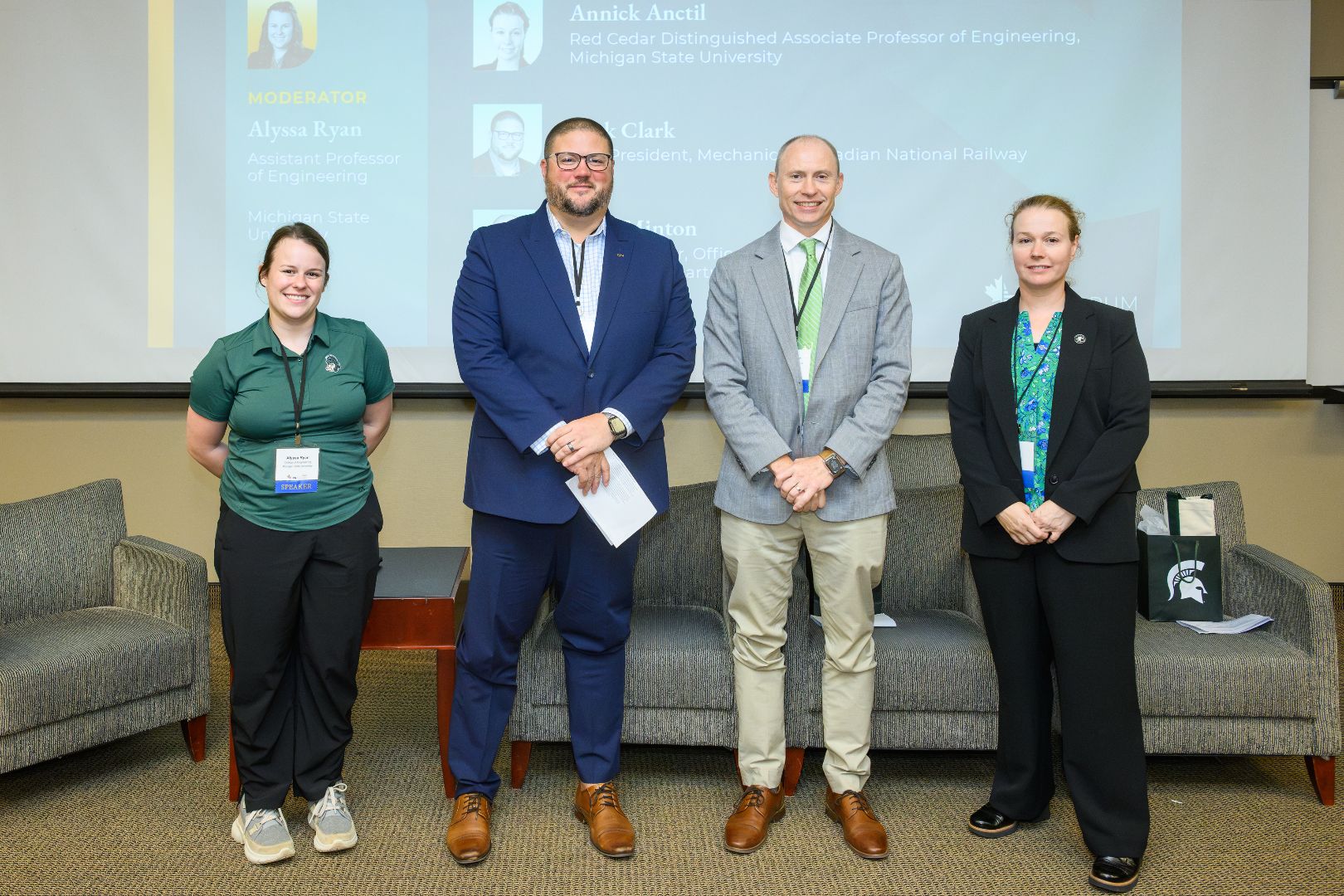
The afternoon panel “Next-Generation Fuels and the Future of Mobility in the Great Lakes Region and Beyond” was moderated by Assistant Professor of Engineering Alyssa Ryan and included Annick Anctil, Red Cedar Distinguished Associate Professor of Engineering; Nick Clark, vice president- mechanical at CN; and Steve Minton, an administrator with the Office of Major Projects at the Michigan Department of Transportation.
Panelists discussed the current deployment of next-generation fuels for passenger transportation, including cars, trains, and buses, and the use of alternative fuels by industry, including CN. Michigan's next-gen energy strategies were contrasted with regional, national, and subnational strategies, and the panel identified areas for increased binational collaboration.
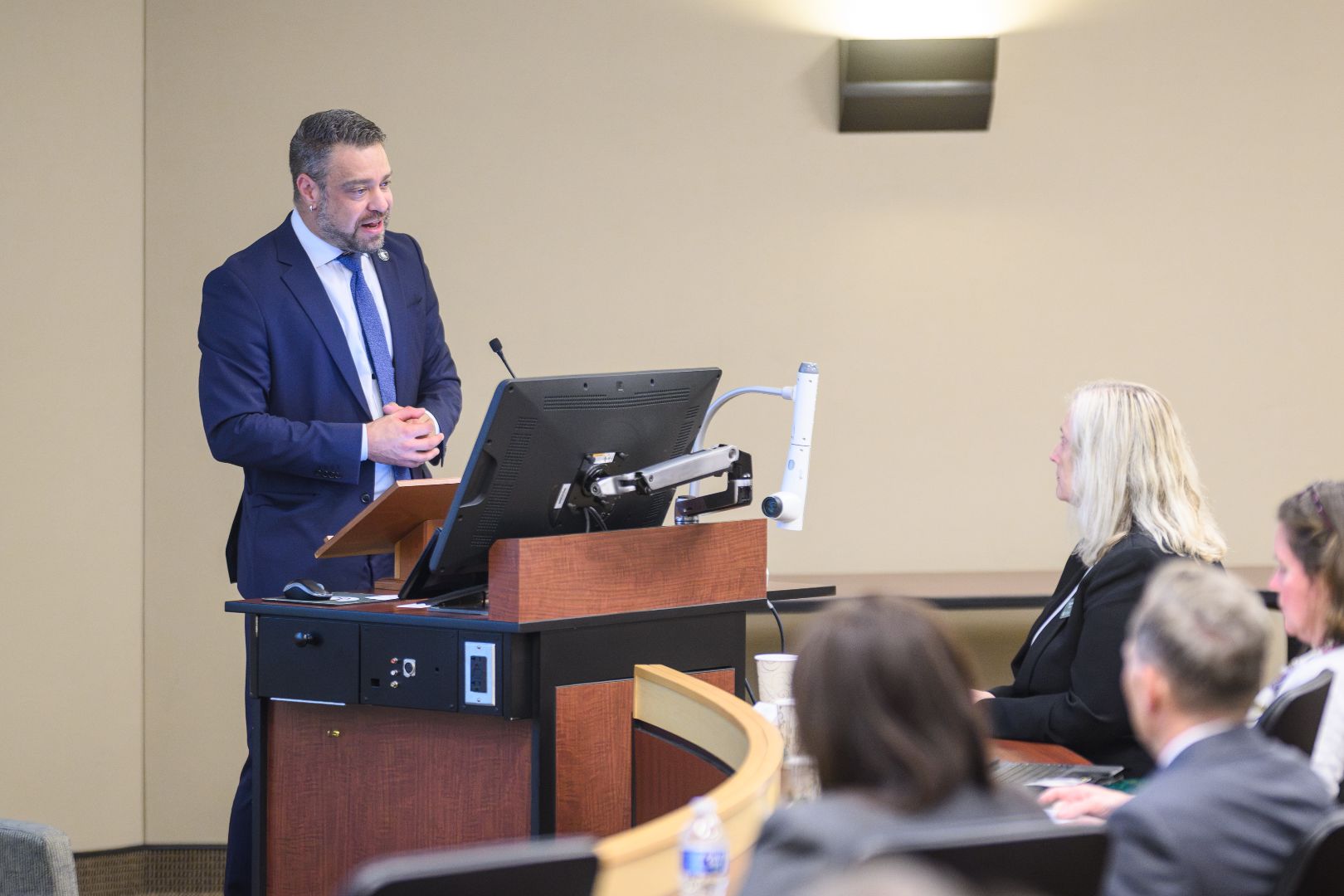
Finally, Center Director Rebecca Malouin ended the program by recognizing the invaluable support of Colin Bird, former consul general of Canada in Detroit, and Jean-François Hould, Québec delegate in Chicago. Both were presented with an award in recognition of their longstanding friendship and guidance on behalf of the government of Canada and the province of Québec, respectively. Mr. Hould accepted his award in person, and Mr. Bird provided remarks via a pre-recorded message.
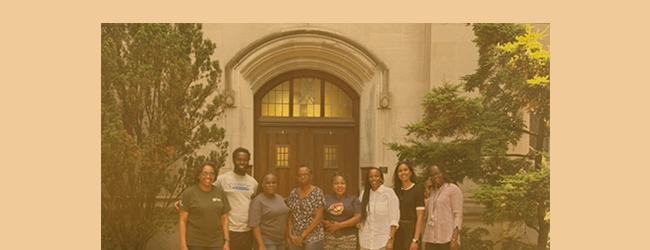
AAP welcomes sixth cohort
of African Futures scholars

AAP awarded $895,000 by
Carnegie Corporation of New York
AAP Bridge:
Connect and
collaborate online
COIL Faculty Fellows Program:
Announcing our fourth cohort



