Alaina Bur is the 2026 recipient of the Gil-Chin Lim Award for Outstanding Doctoral Dissertation in Global Studies. The award recognizes one graduate student each year for their outstanding doctoral dissertation focused on global studies and completed the preceding year.
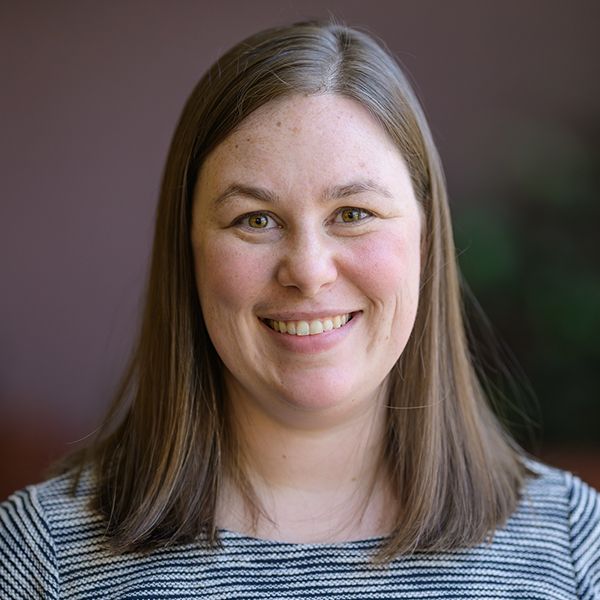
Bur earned her doctorate in sociology in December 2024. She was an environmental science and policy program (ESPP) fellow and completed an ESPP dual major with sociology. Bur specialized in gender, justice and environmental change, emphasizing feminist epistemology. For her dissertation, Bur completed a research project in Kenya with local partners with whom she had established long-term relationships.
“I worked with Dr. Bur for the entirety of her studies at Michigan State University and had the opportunity to witness not only her academic achievements but also her intentional process to contribute meaningful, impactful and respectful scholarship in service to her research partnerships in Kenya,” wrote Jennifer Carrera, associate professor in the Department of Sociology and chair of Bur’s dissertation committee.
Bur conducted research on how water management stakeholders’ narratives of social, economic and environmental change in western Kenya shape how they perceive present-day water management policies. Her research explores questions through an intersectional lens, comparing the perspectives of men and women, community members, NGO and government leaders, and those in the forested highlands and water-scarce lowlands.
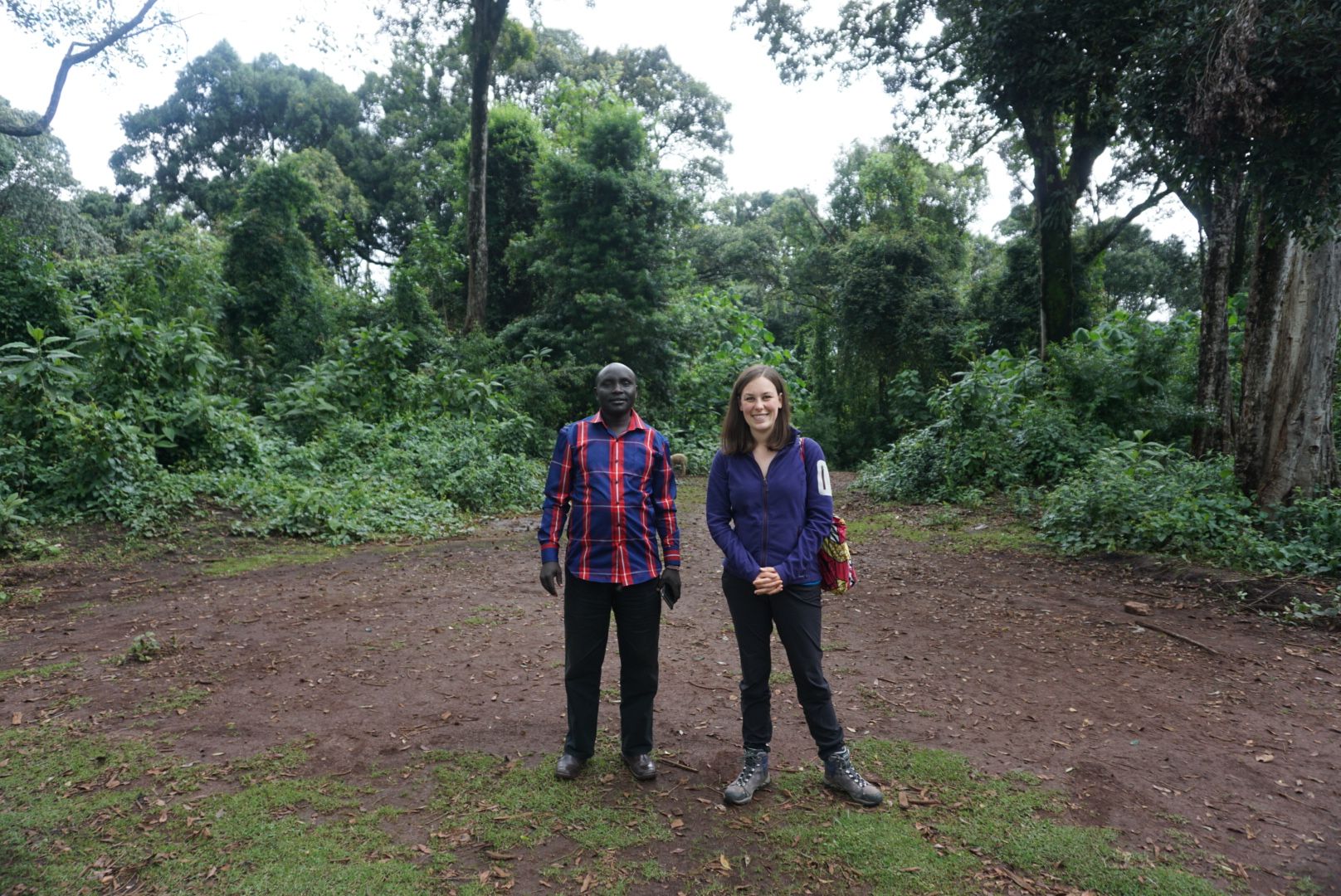
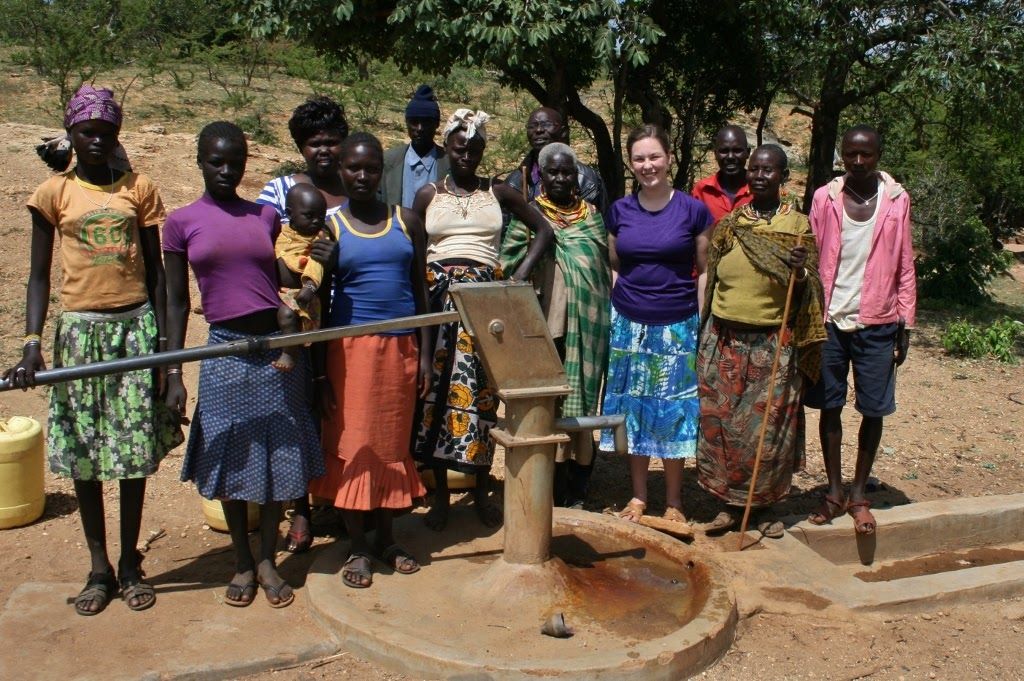
During Bur’s first trip to Kenya in 2013 — before her first year as an undergraduate, she and a group of American donors visited several wells, or boreholes as they are called in Kenya, that had been drilled by Pokot Outreach Ministry, a local NGO. When they arrived, they discovered several had run dry because the water table dropped in the dry season. That trip, Bur says, served as a catalyst for her studies for more than a decade.
“The trip sparked so many questions for me — environmental, social, and historical questions about how the people living in West Pokot County found themselves in a water crisis, but also the moral and ethical ones about whether and how American donors fit into the water crisis in this region and globally,” said Bur.
Bur’s commitment to her research and all partners is nothing short of exceptional. She maintained relationships with the people she established as an undergraduate student in Kenya, through graduate school, through the duration of the COVID-19 pandemic and through the completion of her dissertation.
“While that trip sparked my interest, it is the relationships that I have grown with friends and colleagues in West Pokot since then that have sustained my work and keep pulling me back,” said Bur. “I chose to pursue graduate studies not because I really wanted a Ph.D. but because I felt like I had so many unanswered questions and felt I could not understand them without fully immersing myself in Kenya.”
“This commitment is essential in conducting ethical, community-engaged research,” Carrera noted.
Bur’s commitment was evident in a myriad of ways.
“When it came time to choose where I would go for graduate studies, MSU’s Swahili program was the deciding factor,” said Bur. “I had been conducting interviews with women who did not speak English, so I was eager to be able to interview folks myself without a translator.”
Bur became fluent in Swahili to conduct research directly with participants, which required extensive language training, continuing well beyond regular coursework, Carrera explained. To finance her efforts, Bur received seven Foreign Language and Area Studies fellowships, including a dissertation research fellowship and a writing fellowship in support of this effort.
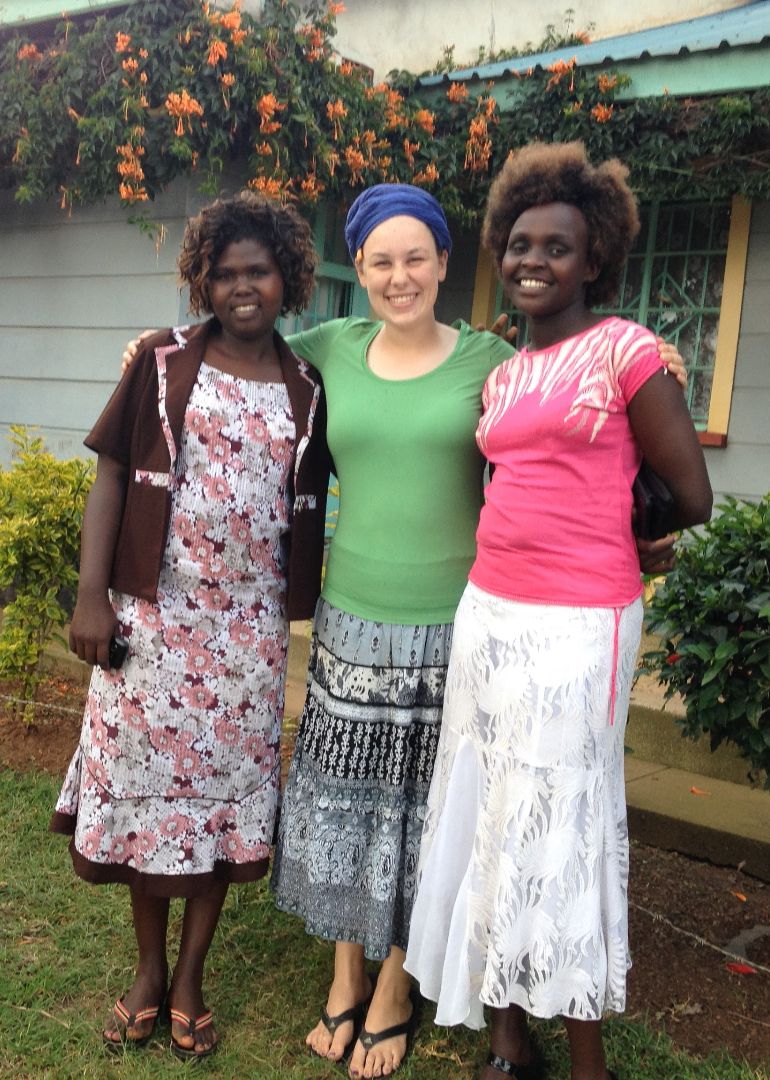
After an intensive Swahili language program in Tanzania, Bur returned to Kenya for a week where she had her first unassisted conversations with many non-English speaking friends from prior stays. Those moments gave her the motivation to return to MSU to continue learning Swahili for another year.
“[Learning] Swahili has been the essential vehicle for me to deepen my connections and understanding with friends, colleagues and research participants in Kenya,” said Bur.
Additionally, Bur ran a storybook workshop in a sixth grade Swahili class, assembling the stories, editing them and translating the stories to English to print and return to students. These stories were used as a tool to share Kenyan culture with elementary school children in Michigan, and to develop literacy with adults and Swahili-speaking ESL students whom she taught back in Lansing.
Since completing her doctorate, Bur was hired as the assistant director of the MSU Center for Gender in Global Context, or GenCen. Working for GenCen allows her to continue to support international research related to gender and environment.
“I feel at ease, at home, and it took a very long time to feel that way in Kenya. Those moments of belonging are precious,” Bur said.
AAP welcomes sixth cohort
of African Futures scholars

AAP awarded $895,000 by
Carnegie Corporation of New York
AAP Bridge:
Connect and
collaborate online
COIL Faculty Fellows Program:
Announcing our third cohort



